


Why Believe in an Invisible God? Evidence Beyond Sight

Summary
Sight alone cannot determine truth. Human hearts deceive, creation reveals God, and science cannot fully explain life’s origin. Scripture exposes human sin and points to faith in the invisible King. In Jesus Christ, God became visible, and His resurrection provides compelling evidence for belief beyond what we see.
The Limits of What We See
Seeing is not the only path to truth. In a deceptive world, seeing is overrated. Illusionists demonstrate that for a living. What appears to be happening is not. The lady in the box is not cut in half, although our eyes tell us she is.
Assuming that seeing something proves it is genuine disregards the real world, where we deceive ourselves, and many seek to deceive us. To most people, counterfeit money looks authentic. Many fabricated videos, stories, and images in the digital world seem real. Deepfakes abound. I saw on television a fake ID with Benjamin Franklin’s picture.
People deceive us with statistics. A town’s politicians announced a 50 percent drop in murders last year. They do not tell us that the actual number changed from two the previous year to one last year because the perception that crime rates are significantly down keeps them elected.
The Deceptive Human Heart
We excel at deceiving ourselves. “The human heart is the most deceitful of all things, and desperately wicked. Who really knows how bad it is?” (Jeremiah 17:9 NLT).
We cannot trust it. It lies to us constantly. Deceptive human hearts ask, “Why do you believe in something you can’t see?” They refuse to submit their sovereignty to an invisible God who claims their thrones or to acknowledge a God-centered Universe that they did not create.
Creation’s Clear Testimony
That same invisible Rival says through the Apostle Paul, “For ever since the world was created, people have seen the earth and sky. Through everything God made, they can clearly see his invisible qualities—his eternal power and divine nature. So they have no excuse for not knowing God” (Romans 1:20 NLT). In other words, they have no excuse for asking, “Why do you believe in something you can’t see?” The real problem is that those deceptive hearts don’t believe the clear message God’s creation sends.
Science and the Supernatural
Many scientists believe we have no reason to believe in the supernatural. They try to explain away why there is something (the Universe) instead of nothing. They credit evolution for the world as it is. From where did life appear that evolution is supposedly molding? It amazes me that they believe that mindless matter can create what intelligent humans cannot.
The chance that extremely complicated biological systems (the human brain, for example) evolved from non-living material is vanishingly small. Deceitful hearts habitually spawn God-excluding explanations of the world as it is, no matter how improbable. If these scientists were right (they are not), would you trust a brain that traces its origin to mindless matter?
The Problem of Human Goodness
Granted, these conclusions assume that the God we can’t see reveals otherwise inaccessible truth through His word. For example, we think of ourselves as good-hearted, with a small minority being otherwise.
But with God as the definition of good, Romans 3:12 (NLT) says we are all otherwise. “All have turned away; all have become useless. No one does good, not a single one.”
Because things are not what they seem, from a Christian perspective, we could turn the question around and ask, “Why do you believe in only what you see?”
Why Believe in an Invisible God
Moses left Egypt because he paid more attention to the invisible King than to the visible Egyptian king (Hebrews 11:27). That invisible King used Moses to part the Red Sea (Exodus 14:16), which the visible king could not.
God Made Visible in Christ
The best news ever is that the invisible God became visible in Jesus Christ, fully God and fully man. “Christ is the visible image of the invisible God. He existed before anything was created and is supreme over all creation” (Colossians 1:15 NLT). Jesus said that those who have seen Him have seen the Father (John 14:9) and that He and the Father are one (John 10:30).
The Resurrection as Evidence
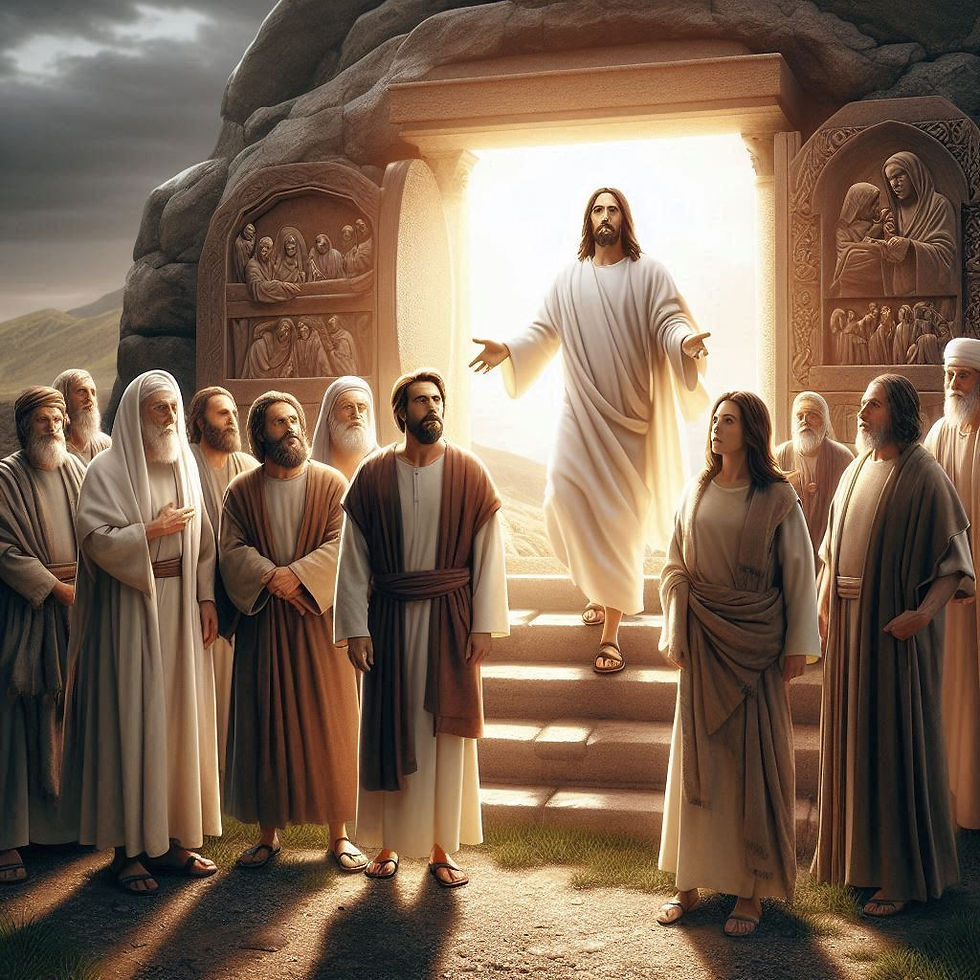
His resurrection from the dead proved that He was the Son of God (Romans 1:4). John Singleton Copley, who dealt with evidence for a living, said, “I know pretty well what evidence is, and I tell you, such evidence as that for the resurrection has never broken down yet.” 1 He was a British lawyer and politician (1772-1863).
Jesus’ resurrection and the coming of the Holy Spirit (Acts 2:4) are the best explanation of the transformation of frightened disciples into bold preachers, most of whom died for preaching the resurrection. People don’t die for lies they know are lies. They believed it because they saw the risen Jesus repeatedly. Also, 500 people all saw Him at one time (1 Corinthians 15:6).
Untold millions of Christians have pointed to the resurrected Jesus as the one who has changed their lives. The testimony of so many all pointing in the same direction should not be taken lightly. Christians believe in something they can’t see, not against the evidence, but beyond it.


Comments